
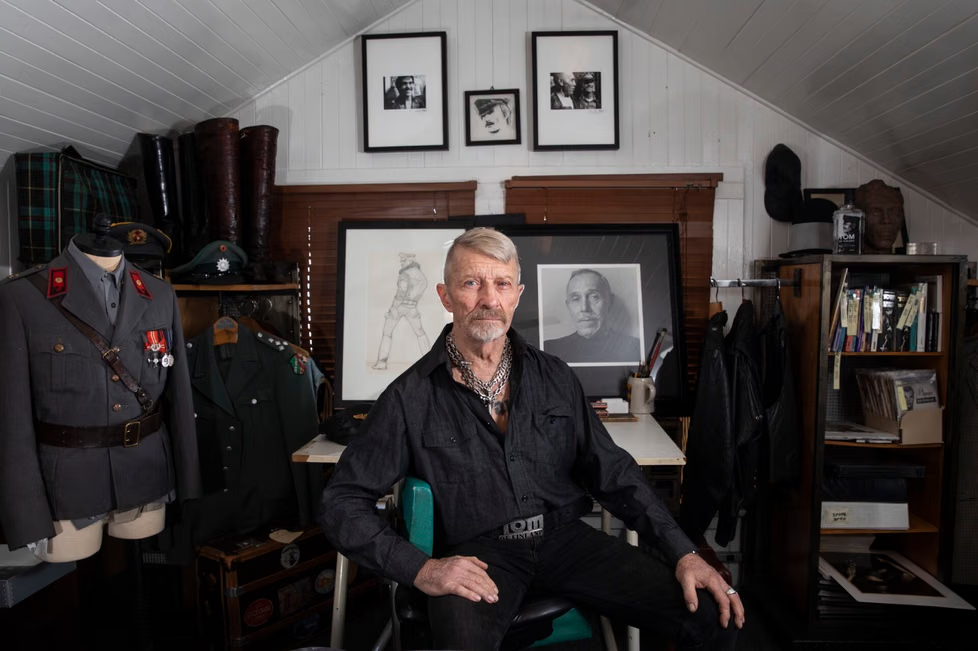
The future of the American foundation that cherishes the legacy of artist Tom of Finland, also known asTouko Laaksonen(1920–1991), is unclear.
Known for his homoerotic works, Laaksonen is one of the most internationally renowned Finnish visual artists, and a significant portion of his works have been in the possession of the Tom of Finland Foundation in Los Angeles. It may even be the world’s largest Tom of Finland collection.According to the foundation’s website,it holds at least 2,000 works and sketches by Laaksonen.S.R. Sharp, who headed operations at the foundation until the summer of 2026,tells HS over the phone that the total number of known Tom of Finland works is estimated to be 4,000.
The foundation has operated for a long time in a house known as TOM House in Echo Park, Los Angeles. The House was Laaksonen’s home and studio in the United States. Recently, the foundation’s leadership has changed, and the new board, which has fallen out with the foundation’s long-time activists, has decided to move the collection out of TOM House. It is not yet known where the collection will ultimately be placed and how it will be made available to the public.
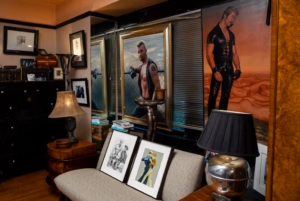
TOM House has housed a home museum about Touko Laaksonen, an artist community, and an extensive archive. In addition to Tom of Finland’s works, the archive houses a larger collection of queer art and erotic art inspired by Tom of Finland. TOM House has hosted artists from around the world for residencies for over a decade. The city of Los Angeles has granted the house the status of a cultural historical site.
The future of all this is now unclear. The foundation’s current board has dismissed the old staff and put its residency activities on hold. The artists and the foundation’s former management accuse the foundation’s current board of not clearly stating what the future of the collection and the foundation’s operations are.
It is not yet known where the collection will ultimately be placed and how it will be made available to the public. Currently, according to Sharp, all its collections are stored appropriately and in accordance with museum standards. However, Californian guardians of Laaksonen’s legacy are concerned that the foundation has not said exactly what it plans to do with the collections.
The Tom of FinlandFoundation was founded in the United States in 1984 by Touko Laaksonen and his collaborator and personal partnerDurk Dehner. The foundation’s purpose has been to protect Laaksonen’s estate and raise the cultural and academic appreciation of erotic art. Dehner has received the Knight’s Order of the Lion of Finland from the President of the Republic Sauli Niinistö in 2023 in gratitude for preserving and presenting Laaksonen’s legacy.
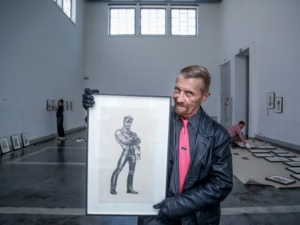
The foundation has long paid Dehner rent for the use of the house, which has been used to maintain the TOM House artist community and collections. However, in the summer of 2026, around the same time that the foundation laid off a large part of its staff, the foundation stopped paying rent without giving a reason and announced that it would remove the Tom of Finland collection. Only a few dozen works donated by Laaksonen to Dehner remain at TOM House. Dehnerand the foundation’s current board are not on speaking terms because, according to Dehner, the foundation refuses to communicate with the TOM House owners except through lawyers.
Sharp says, “Tom’s spirit lives on in this house. And you are Finnish. Finland is a place of honesty and openness. We inherited from Tom that we act openly and honestly. I am very sad. So much could have been clarified with direct communication.” Sharp is saddened that Tom’s legacy will be disconnected from the house where he lived in his last years and where the foundation has operated for decades. “The plan was that this house would always be part of the foundation,” he says.
Artists who have been artists-in-residence at TOM House have criticized the foundation’s board for a lack of information and transparencyin an open letter.One of the signatories of the letter was doctoral researcherAntti Kauppinen. He believes that the collection is the largest single collection of Tom of Finland’s works in existence and considerably larger than the Tom of Finland Collection at the Museum of Contemporary Art Kiasma. Therefore, Kauppinen finds it nationally significant to follow what is happening to the collection now. According to resident artist-in-residence Matteus Pentti, interviewed by HS, the archives is one of the world’s most extensive collections of erotic art.
HS was unable to reach the board of the Tom of Finland Foundation for an interview despite several attempts.
COMPLETE ARTICLE BY EINO RISSANEN AND ELSA MÄKI-KOKKILA
These excerpts were translated from Finnish and lightly edited and arranged for flow and clarity.