
Swedish artist Roko Fearon traveled from Florida to Los Angeles for three months as part of the Tom of Finland Foundation’s Artist-in-Residence program. He didn’t know the foundation was in crisis. “I basically met people who introduced themselves to me while they were saying goodbye.”
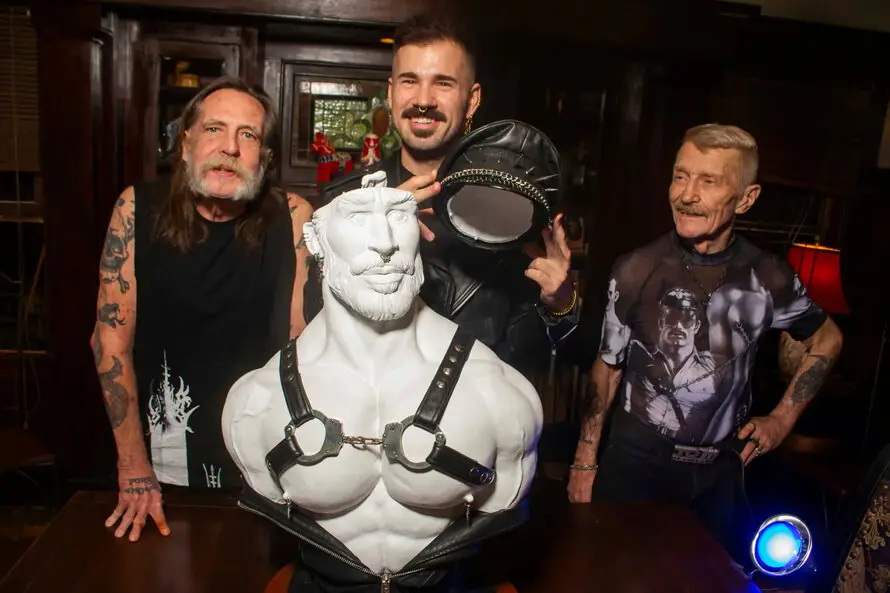
Roko Fearon came toTOM House to work on his art and experience the environment that had been built up in what was Tom of Finland’s American home for long periods in the 1980s. From the very first day, he noticed something was wrong.
Several of the staff had just been fired. Roko describes how he met people who were supposed to be part of his residency, but who were instead leaving the house. He had traveled there from Florida without knowing the larger conflict surrounding the Tom of Finland Foundation (ToFF), and was trying to understand the situation as it unfolded around him.
“It was a very strange way to start a residency”, he tells QX.
For Roko, TOM House was not just a place to live and work. It was a house filled with art, books and objects with a history. But a residency is also about the people who welcome the artist, show the way into the archive and create meetings.
“A residency is not just about getting a room and a place to create. It is also about meetings, knowledge exchange, access to the archive and library and being part of a context.”
He felt that the support from the foundation was limited. According to Roko, no one from ToFF came to the house or called him. Contact was through the person who managed social media. The support he received mainly involved sharing his work there and being featured on the foundation’s website.
“I didn’t want to let all this take away my opportunity to create art. I came there to work, and that’s what I did.”
Roko himself worked with material from the house’s collage archive: clippings from old porn magazines, copies of Tom of Finland pictures and old gay magazines. This work became the basis for his exhibitionLost & Found Fantasies , which opened at TOM House on September 24.
Roko says he started working more with collage during the residency, a technique he had barely explored since childhood. He had also been looking forward to courses in collage and sketching. He managed to take a collage course the first week. Then the funding for the activities stopped, he says.
“I started working a lot with collage during my time at TOM House. It made me think about how other courses and creative encounters could have influenced my work.”
The work on the exhibition itself was also part of the experience. Roko says he had to do it without staff on site, and he himself had to balance the completion of the works with marketing and trying to get people to the opening. He felt that ToFF did not promote the exhibition the week before the opening, while the foundation was promoting an event in New York.
Nevertheless, he thinks the exhibition was a success. During his stay, he created some of the most ambitious works he has done to date and experimented with techniques and materials he wants to continue working with.
He believes that the residency is an important part of the foundation’s mission: Tom of Finland’s legacy lives on when contemporary artists encounter his work and create something of their own. A large number of former artists-in-residence have written an open letter to the board calling for information about the archive, the artist program and ToFF’s future direction.