
For more than forty years, Durk Dehner has dedicated his life to the Tom of Finland Foundation and the house where Touko Laaksonen lived and worked. Now the foundation has moved the art from the TOM House. Dehner has lost his job and says he is not getting the rent he needs for his mortgage and maintenance. “This is my home. This is my child,” he writes.
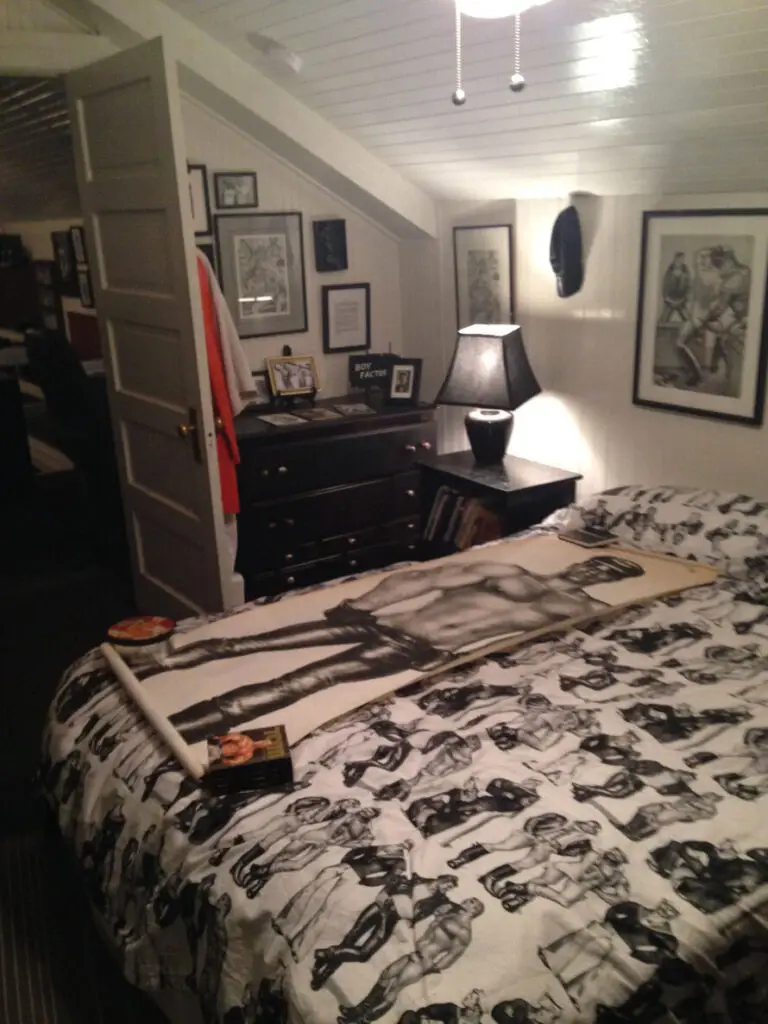
For over forty years,Durk Dehner has dedicated his life to spreading the message ofTom of Finland’s sex-affirming, humorous and style-defining art. Now, Tom of Finland Foundation (ToFF) has moved original works fromTOM House and is pausing the Artist-in-Residence Program. At the same time, Dehner says he is without the rent he needs to maintain the house he owns, the place he built his life around withTom and a large part of the community.
Tom of Finland, or Touko Laaksonen, met Durk Dehner in the late 1970s. Together they founded the Tom of Finland Foundation in 1984. Since then, Dehner has spent many long years finding and collecting original works that have fallen by the wayside.
Michael Holm at the SwedishRevolt Press, which published Tom of Finland in the 1970s,Axel andEigil Axgils and the DanishCoq , which published him in the 1960s, and earlier American publishers had originals left in boxes. Much was eventually recovered. The collection of drawings and sketches grew and was preserved at the TOM House in the Echo Park neighborhood of Los Angeles.
Dehner’s work to promote Tom of Finland grew. Through exhibitions and commercial collaborations, Tom-guys ended up almost everywhere. Finland embraced its son with as much enthusiasm as they did forTove Jansson’s Moomins, and in 2023Dehner was awardedthe Order of the Lion of Finland for his work in preserving the artist’s legacy.
Dehner now writes that the symbols he used were in a sexual leather context and refers to the fact that Tom of Finland also worked with Nazi uniforms and figures in erotic images.
The work with artists at TOM House also became central. The Artist-in-Residence program has led to research, education, exhibitions and seminars. There, artists have been able to work with archive material and create in the house where Tom himself lived and worked. Sunday meetings and screenings have made the house a meeting place for erotic art and queer history. Dehner has done much of this together with his partnerSharp and other committed people.
“This is my home. I have managed the maintenance of TOM House and the property and been deeply involved in every event here. This is my child. I have done everything I can to support it, even when my relationship with it has changed dramatically.”
He says that he has tried to pay his bills, including the mortgage, and recently replaced the roof. This was necessary, he writes, to avoid the risk of the insurance company canceling the insurance.
“The situation with the foundation is sad and hurtful.”
When Dehner expressed concern about how he was treated, he was told that communication had to go through lawyers. He writes that he therefore cannot say more about that part of the conflict.
Dehner also says that ToFF staff have been laid off and worries that the knowledge that has been built up over decades will be lost. Among the positions he mentions are archivist and registrar, artist coordinator, and donors and members [coordinator].
“The historical knowledge base will be lost”, he says.
The Tom of Finland Board says it wants to secure Tom of Finland’s works for the future. Dehner and his supporters worry that the house, the knowledge and the community surrounding the collection will be lost.
The artworks can now truly be in a safer place, even if their storage is still secret. But the ongoing conflict risks leading to a major loss of knowledge, a deep rift with long-standing committed people and wounds within the leather environment that may take a long time to heal.
It may seem difficult at the moment to see how communication via lawyers can turn into cooperation. But for all Tom of Finland fans, not least in Finland, the country that has in recent years paid tribute to their son and his legacy, the hope must be that Dehner and the knowledge, experience and forces around TOM House can once again become part of the Tom of Finland Foundation.
Onthe campaign website Save TOM House, Dehner appeals to the community to get involved. He writes about the Sunday salons that he and Tom held for other artists and about how TOM House has become a place for artist meetings, screenings and residencies. He believes that the collection and the house should not be separated.The support comes from artists and former residents. FilmmakerBruce LaBruce describes TOM House as an irreplaceable part of Los Angeles’ queer cultural history. ArtistRichard Hawkins , who has worked with ToFF for over thirty years, writes that Dehner’s experience and vision have been pushed aside. In their open letter, former artists-in-residence demand information about the archive and the program’s future, and offer to contribute to the work.