
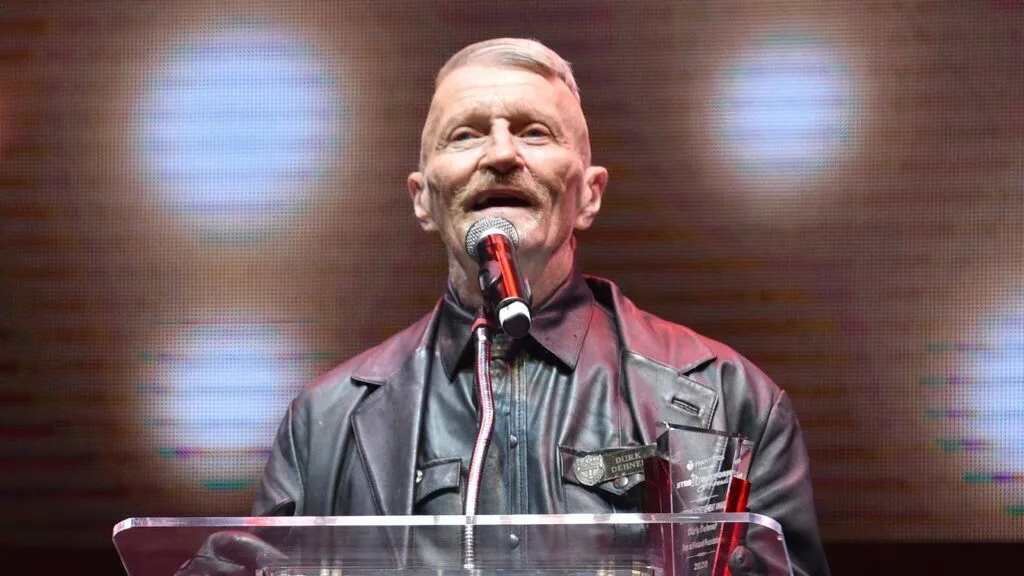
File photo: Durk Dehner, Avalon Hollywood, Los Angeles, Jan. 12, 2020. Gregg DeGuire/Getty Images
Tom of Finland was the pen name of Touko Valio Laaksonen, a Finnish artist born May 8, 1920, who died Nov. 7, 1991. His pencil drawings of muscled loggers, bikers, sailors and cops, usually in tight denim or black leather and often mid-romp, became the template for a confident, joyful gay masculinity that still shapes gay nightlife and fashion.
Laaksonen grew up in a teacher’s family in Kaarina, near Turku, and moved to Helsinki the City of Helsinki’s MyHelsinki guide says. Music came first in his plans. “I imagined becoming a good pianist and composer,” he once said, as the guide quotes him.Music came first in his plans. “I imagined becoming a good pianist and composer,” he once said, as the guide quotes him.
War got there first. He was called up in spring 1940, weeks after the Winter War ended, and served in air defense in Helsinki, first at Suomenlinna and later at Pitäjänmäki. The war also fed the fantasy. He also worked as a restaurant pianist in Helsinki, longest at the Palace hotel, and in the late 1950s joined the ad agency Liikemainonta, later McCann Helsinki, where he became artistic director. He met Veli “Nipa” Mäkinen, a former operetta dancer and later maître d’, in summer 1953. They lived together for 28 years, MyHelsinki says.
How Physique Pictorial Turned Touko into Tom.
In 1956, Laaksonen mailed drawings to Physique Pictorial, the Los Angeles magazine Bob Mizer had started in 1951. He signed them simply “Tom.” His first published drawing ran on the cover of the spring 1957 issue. By that winter, more drawings ran under the name “Tom of Finland.”
Tom’s men got bolder over the decades. Bikers, cops, sailors and soldiers replaced the wholesome outdoorsmen, and the scenes moved into group sex and leather S&M. The grins stayed. He wanted his drawings “to show gay men being happy and positive about who they were,” he said, in a passage critic Jarrett Earnest quotes.
That attitude is the thing curators point to now. “The fantasy situations depicted by Tom of Finland project a world of enjoyment and pride,” Kiasma wrote in 2023, an image that “then and now opposes conceptions of non-normative or non-confirming identities bearing guilt or shame.”
Finland put him on its mail on Monday, September 8, 2014. Itella Posti, the national postal service, released a stamp sheet using two of his drawings, from 1978 and 1979, designed by Timo Berry. “The things he did are seen in a different light these days, more sympathetic,” says Susanna Luoto, the Finnish representative of ToFF, who initiated the Posti stamp. “It has entered into another field than purely sexual. Tom stands for all tolerance today, beyond homosexuality.”
Museums that once wouldn’t touch him now collect him. MoMA’s online collection lists five Tom of Finland drawings, including “Untitled (Peter Berlin).” SFMOMA lists 14 works, most of them early 1960s drawings. LACMA holds Standing Man in Uniform, a 1983 pencil drawing given by ToFF.
Dome Karukoski’s biopic Tom of Finland, starring Pekka Strang as Laaksonen, opened in Finnish theaters on February 24, 2017.
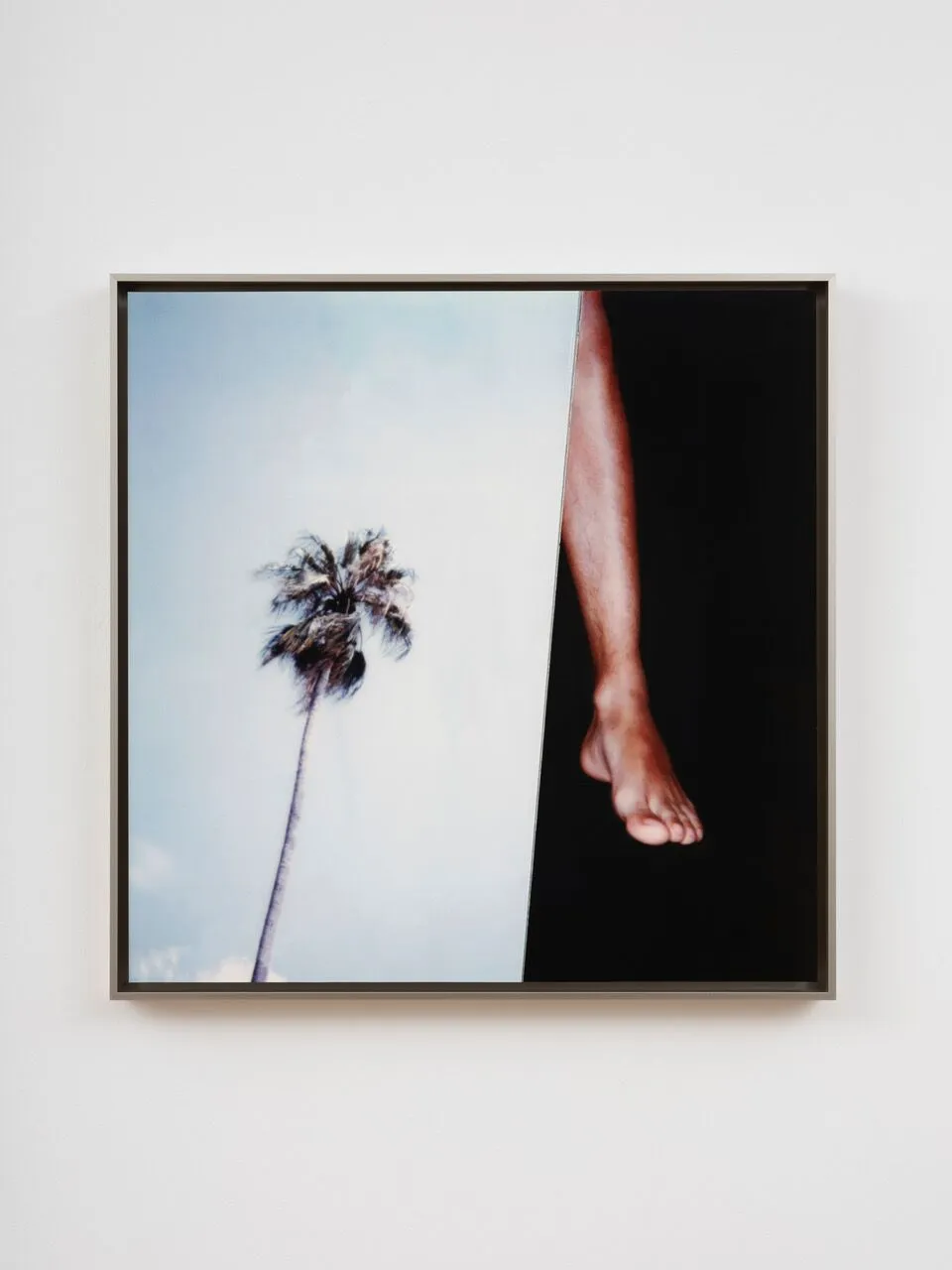
In his later years, Tom split his time between Finland and Los Angeles.
He first came to the city in 1978 for a solo show, and Durk Dehner invited him to use his Echo Park house as a studio and home, the Los Angeles Conservancy says. He worked in Tom of Finland House from a combined bedroom and studio on the third floor of 1421 Laveta Terrace. In 1984, the nonprofit ToFF was established by Durk Dehner and his friend Tom. Los Angeles named the house a Historic-Cultural Monument in November 2016, the Conservancy says.